
Altamira Gold granted Environmental Permit for two Trial Mining Licences within the Central Mineral Resource Area, Cajueiro District Project, Brazil
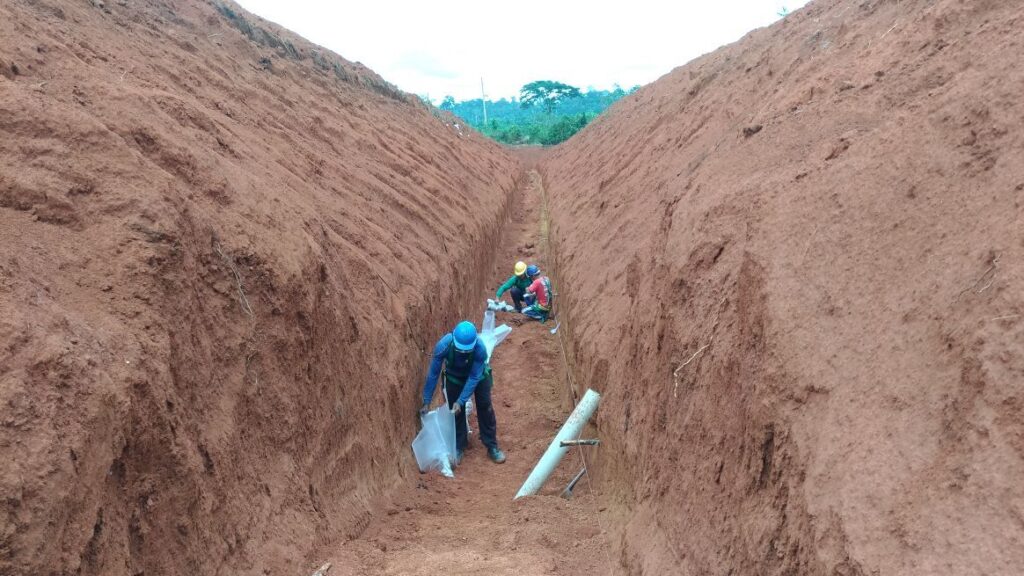
Altamira Gold Corp. [TSXV: ALTA; FSE: T6UP; OTCQB: EQTRF] has received an Environmental Installation License (Licença de Instalação, “LI”) for trial mining with respect to permits 850.224/2009 and 866.464/2017 from the Pará State Secretariat of Environment, Climate and Sustainability (SEMAS/PA) for its Cajueiro Project, Pará State, Brazil.
Highlights: The environmental process LI No 3651/2025 within permits 850.224/2009 and 866.464/2017, was published on September 22, 2025, and is valid for two years until September 22, 2027. This permit covers the northern part of the Central Resource Area.
This license permits the company to construct a plant which would initially process up to 100,000 tonnes of material per year across two mineral rights. The Baldo and Matrincha targets, both located within the current mineral resource in the Central area, are potential sources of feed to a trial mining operation.
Trial mining could potentially generate near-term cash flow, provide greater insight into the structural controls on gold mineralization, and help refine the understanding of the deposit through processing and reconciliation of mined material.
CEO Mike Bennett commented; “Receiving the Environmental Installation Permit for the Cajueiro Project is an important milestone for the company. While no decision has been made to proceed with trial mining, the permit creates a pathway to such activities in the future. Trial mining could potentially provide near-term cash flow, generate valuable geological information, and improve our understanding of the gold mineralization at the Cajueiro Central deposit. We believe this could help identify additional gold-bearing structures and further demonstrate the long-term potential of the project.”
The Cajueiro project is located approximately 75km NW of the town of Alta Floresta in the state of Mato Grosso in central western Brazil. The project is easily accessible by road, lies on open farmland and has grid power and a local water supply. Cajueiro is the most advanced of the key projects that Altamira controls in the region.
The Cajueiro district consists of two independently estimated gold mineral resources at Cajueiro Central and Maria Bonita, plus a series of eight additional untested exploration targets within a radius of 8km of Cajueiro Central.
The Cajueiro Central area has a current open pit resource of 5.66Mt at 1.02 g/t gold for a total of 185,000 oz in the Indicated Resource category and 12.66Mt at 1.26 g/t gold for a total of 515,000 oz in the Inferred Resource category (estimated using a cut-off grade of 0.25 g/t Au and a gold price of US$1,500/oz).
The Maria Bonita open-pit resource consists of Indicated Resources of 24.19Mt at 0.46 g/t gold (for a total of 357,800 oz) and Inferred Resources of 25.64Mt at 0.44 g/t gold (for a total of 362,400oz). These resources were calculated using a 0.2 g/t gold cut-off grade and a gold price of US$2,780/oz. These resources include near-surface saprolite Indicated Resources of 2.02Mt at 0.59 g/t gold (38,000oz) and Inferred Resources of 0.68Mt at 0.40 g/t gold (8,700oz).
The mineralized zone at Maria Bonita is interpreted as dipping to the south and is open down dip. The best drillhole to date (MBA029) intersected 213 metres at 0.8 g/t gold from surface including 146 metres at 1 g/t gold. A third phase of drilling is aimed at testing the area to the south and down-dip from the current resource model.
The Maria Bonita porphyry gold deposit is interpreted as part of a district-scale, porphyry-related mineralizing event. There are currently eight additional porphyry gold targets awaiting scout drill testing over an 8km radius from the Cajueiro Central resource.
The license (LI No. 3651/2025) is valid until September 22, 2027, and authorizes the installation of activities related to trial mining at Cajueiro. The permit covers the Baldo and Matrincha targets, two contiguous mineral rights granted by the National Mining Agency (ANM), with a combined area of approximately 5,137 hectares. The license allows for up to 100,000 tonnes per year of trial mining (50,000 tonnes under each ANM authorization).
The Baldo target corresponds to the Guia de Utilização (GU) under ANM process No. 850.224/2009 whilst the Matrincha target corresponds to the GU under ANM process No. 866.464/2017. Both targets are located within the state of Pará and lie within the currently defined mineral resource (reported under NI 43-101) in the Central area of the Cajueiro Project.
The company is focused on the exploration and development of gold and copper projects within western central Brazil, strategically advancing five projects spanning over 100,000 hectares within the prolific Juruena Gold Belt, an area that has historically yielded over 6 million ounces of placer gold.
The company’s advanced Cajueiro project contains two gold deposits. The central area comprises NI 43-101 resources of 5.66Mt at 1.02 g/t gold for a total of 185,000 oz in the Indicated Resource category and 12.66Mt at 1.26 g/t gold for a total of 515,000oz in the Inferred Resource category. In addition, the Maria Bonita gold deposit comprises additional open pit Indicated Resources of 24.19Mt at 0.46g/t for a total of 357,800oz, and Inferred Resources of 25.64Mt at 0.44g/t for a total of 362,400oz.
Ongoing exploration and fieldwork at Cajueiro indicate the presence of multiple porphyry gold systems, reinforcing its potential for district-scale development. These hard-rock gold sources align with historical alluvial gold production, highlighting the region’s exceptional gold endowment and potential scalability.
Resource World Magazine Inc. has prepared this editorial for general information purposes only and should not be considered a solicitation to buy or sell securities in the companies discussed herein. The information provided has been derived from sources believed to be reliable but cannot be guaranteed. This editorial does not take into account the readers investment criteria, investment expertise, financial condition, or financial goals of individual recipients and other concerns such as jurisdictional and/or legal restrictions that may exist for certain persons. Recipients should rely on their own due diligence and seek their own professional advice before investing.